
Cash Advance – Quick Borrow
TIMECORE StudioFinance
4.830.00 Reviews
- Version
- 1.0.7
- Installs
- 10.00K
- Age Rating
- Everyone
Screenshots

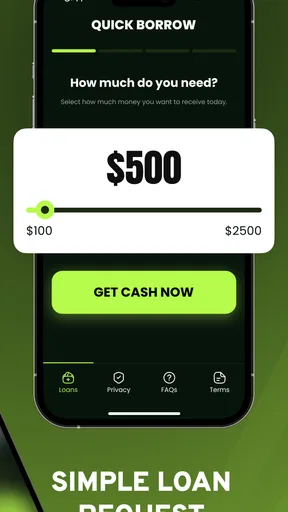

Our Review of Cash Advance – Quick Borrow
 Analysis by Appyee
When an unexpected bill arrives, the hardest part is often not finding an app but understanding what it can realistically do for you. Cash Advance – Quick Borrow is a finance app from TIMECORE Studio that focuses on helping users explore cash advance and personal loan offers through an online request. I approached it as a practical borrowing tool rather than a general budgeting app, and that distinction matters from the first screen.
The app is free to install, which makes it easy to try without paying an upfront purchase fee. That does not mean borrowing itself is free, though. A loan or cash advance can involve terms, costs, eligibility requirements, and repayment obligations determined during the request process. My main advice is to treat the app as a way to investigate available offers, not as proof that quick money will be inexpensive.
In everyday use, its appeal is clear: it puts a borrowing request on a phone instead of requiring a visit to a branch or a long search through unrelated websites. That convenience is useful, but it also makes it easier to act too quickly. I would use it when I had already worked out exactly how much I needed and how I planned to repay it, rather than opening it impulsively whenever my balance looked tight.
How Cash Advance – Quick Borrow fits into the borrowing process
Cash Advance – Quick Borrow belongs to the finance category, but it is more narrowly focused than a banking app, expense tracker, or savings tool. Its store summary centers on cash advance and personal loan offers, with an online request intended for people looking for quick access to cash. That gives it a specific role: it is a starting point for exploring borrowing possibilities, not a complete financial management system.
I like this focused approach because someone facing a short-term cash problem does not necessarily want a screen full of investment charts or spending categories. A direct route to a request can feel less intimidating. At the same time, the focused design means I would not expect it to replace a bank account, a credit-building service, or a proper debt-management plan.
The developer is TIMECORE Studio, and the app is currently listed as version 1.0.7. It supports devices running Android 7.0 or later, so compatibility should be broad for many Android users. It is also marked for Everyone, although the borrowing decisions made inside a finance app are obviously more serious than that simple content label suggests. An age label describes app content; it does not guarantee that every user will qualify for an offer.
The app has reached over ten thousand installs and holds a 4.8 average from around one thousand ratings, with about thirty written reviews. Those figures suggest that many people have found the app worth trying, but I would not use popularity or a high average rating as a substitute for reading the actual terms of any offer. A pleasant request experience and an affordable loan are two different things.
What the free download really means
The download price is free, so there is no purchase decision in the usual app-store sense. I can install it without committing money simply to open the service. That is a genuine advantage for comparison shopping, especially when the alternative is spending time contacting several providers one by one.
Still, “free” should be read carefully here. The verified price tells me the app itself does not require an upfront purchase, but it does not turn a cash advance into a free service. Once a user considers an offer, the important questions become the total repayment amount, any fees, the due date, the consequences of late payment, and whether the arrangement fits the user’s income cycle. I would never judge an offer from the requested amount alone.
There is also a useful psychological distinction between free access and good value. Free access means I can inspect the borrowing pathway without paying for the app. Good value means the information and available offer, if any, help me make a safer financial decision. The second judgment depends on the terms shown during the process, not on the download price or the rating.
For that reason, I would prepare before opening the request. I would write down the exact amount needed, the earliest realistic repayment date, and the maximum total repayment I could handle. Having those three points ready makes it easier to reject an offer that solves today’s problem by creating a larger one next month.
What I would check before accepting anything
The most important workflow tip is to separate the request stage from the acceptance stage. I would use the app to see what borrowing route is available, then pause before agreeing to anything. I would look for the full repayment figure rather than focusing on the cash received, and I would compare the timing of repayment with my actual pay schedule.
A second practical tip is to save the details of an offer in a private note before leaving the screen. I would record the amount requested, the amount received if different, the total to repay, the payment date, and any stated charges. This is not busywork. Short-term borrowing can look manageable when presented as a single amount, while the repayment deadline may reveal that it clashes with rent, utilities, or other fixed expenses.
A third trade-off concerns speed. An online request may be more convenient than contacting a traditional lender, but speed can reduce the time available for comparison. I would open my regular bank app, check whether an existing overdraft or credit facility has clearer terms, and compare the full cost rather than assuming the fastest route is the best route.
Where the app provides useful value
The strongest value is convenience for someone who needs to investigate options quickly. A person with an urgent car repair, a delayed paycheck, or a necessary household expense may prefer a mobile request to a lengthy search. The app’s narrow purpose can reduce the friction of getting started, especially for someone who already knows that a cash advance or personal loan is the type of product they want to examine.
It can also be useful as a comparison trigger. Even if I ultimately choose a bank, credit union, employer-supported option, or another lender, starting with a dedicated request app can remind me to ask the right questions. The real benefit is not simply obtaining money; it is making the cost and repayment structure visible before committing.
For example, imagine that my paycheck is arriving several days later than expected and a utility payment is due first. I might open the app to explore whether an offer is available, but I would first contact the utility provider to ask about a payment arrangement and check whether my bank offers a less expensive short-term option. If borrowing remains necessary, I would use the app’s request process with a precise amount rather than asking for extra money “just in case.”
That scenario shows both the app’s usefulness and its limit. It can make borrowing research faster, but it cannot decide whether borrowing is the right answer. The best result may be a smaller request, a delayed payment agreement, or no loan at all. I consider the app more valuable when it supports that kind of deliberate comparison than when it encourages an instant decision.
What it is not designed to replace
I would not install this expecting a full personal finance dashboard. Someone trying to control spending, build an emergency fund, track subscriptions, or plan debt repayment needs a different kind of tool. A loan-request app addresses access to credit; it does not automatically improve the underlying budget problem.
It is also not the right first choice for a person who does not know when repayment will be possible. If the only plan is to borrow now and hope that money appears later, a quick request may increase financial stress. In that situation, I would look first at free debt advice, a trusted financial counselor, a creditor payment arrangement, or help from a regulated institution with transparent terms.
Likewise, users who already have a clear pre-approved option through their bank may gain little from adding another borrowing route. Their existing provider may offer more familiar account integration, clearer repayment history, or a better-established support channel. The convenience of a new app is not automatically worth giving up that familiarity.
Friction and caution points in real use
The biggest friction is not necessarily navigating the app; it is the responsibility placed on the user once a fast request becomes possible. A smooth interface can make a high-cost decision feel ordinary. I would slow down deliberately, read every disclosure, and avoid treating an approval or offer as a recommendation.
Another limitation is that an offer is not the same as guaranteed access to funds. Eligibility, identity checks, requested information, and lender decisions can affect what happens after a user begins. I would therefore avoid planning a time-sensitive payment around money that has not actually been approved and received.
Privacy is another reason to stay attentive. Any finance request may involve sensitive personal and financial information. Before submitting details, I would read the app’s current privacy and permission explanations, confirm that I am using the genuine application, and avoid entering information while connected to an untrusted public network. These are sensible precautions for a borrowing request, regardless of how reputable the interface feels.
I would also be careful with repeated requests. If the first result is unsuitable, submitting many applications in a rush may not improve the outcome and can make it harder to keep track of what was agreed. A better approach is to stop, compare the terms with alternatives, and decide whether the need itself can be reduced or postponed.
Who is most likely to get value from it
I see the best fit as an Android user who wants to explore a cash advance or personal loan offer online, understands that the app is only part of the decision, and can identify a realistic repayment date. The free download lowers the barrier to research, while the focused purpose keeps the experience centered on borrowing rather than unrelated financial tools.
It may also suit someone who dislikes making several phone calls and wants a convenient first step. The app can help organize the initial search, provided the user is willing to compare the resulting terms with a bank, credit union, employer option, or direct lender. In my view, the ideal user is not simply desperate for speed; it is someone who wants speed without abandoning caution.
I would recommend skipping it if you are looking for budgeting, savings automation, investment guidance, or long-term debt support. I would also skip the borrowing route if repayment would depend on another loan, a credit card balance transfer, or an uncertain future income. A free app cannot make an unaffordable obligation affordable.
Users should also remember that the Everyone content label does not answer practical eligibility questions. Being able to install the app does not mean a user will qualify for an offer, and an offer does not mean it will suit their circumstances. Those are separate questions that must be answered during the financial review of the terms.
My verdict on value versus the usual alternatives
Compared with visiting a branch, Cash Advance – Quick Borrow is more convenient and less time-consuming as an initial request channel. Compared with a bank’s own app, it may be useful when I want to explore a different route rather than stay within my existing provider. Compared with a budgeting app, however, it offers a completely different kind of value: it may help investigate borrowing, but it does not help solve the habits or cash-flow gap that caused the need.
My buy-or-skip decision is straightforward because the app itself is free. I would try it if I needed to examine borrowing options and was prepared to compare the complete repayment terms. I would skip it if I wanted a financial planning tool, if I had no repayment plan, or if I was likely to accept the first fast offer without checking alternatives.
Overall, I find the app most useful as a convenient doorway into a borrowing request, not as a shortcut around financial judgment. TIMECORE Studio has positioned it around a clear need, and its strong average rating and growing install base make it reasonable to consider. The real test, though, happens after the request begins: whether the available terms are transparent, manageable, and genuinely better than the options already available to you.
My practical recommendation is to use it for comparison, not impulse. Decide the smallest amount you need, calculate what you can repay, read the full offer, and check at least one familiar alternative before accepting. Used that way, Cash Advance – Quick Borrow can save time during a stressful search. Used without that pause, its convenience may become the very thing that makes an expensive decision feel too easy.
Verdict
Strengths of Cash Advance – Quick Borrow
- Simple application process with clear borrowing steps.
- Fast eligibility checks can save time in urgent situations.
- Loan details are presented before you accept the offer.
- Useful repayment reminders help reduce missed due dates.
- Small borrowing amounts may suit short-term cash needs.
Limitations of Cash Advance – Quick Borrow
- Approval and loan availability may vary by location and user profile.
- Short repayment periods can make installments difficult to manage.
- Late payments may lead to additional fees or affect your credit.
- Personal and financial information is required during registration.
- The app may not be suitable for recurring or long-term borrowing.
Similar Picks in This Category
View All
Google Wallet
Google LLC4.3

Airtel: Recharge, Bank & Loans
Airtel4.0

PayPal - Pay, Send, Save
PayPal Mobile4.2

DANA Indonesia Digital Wallet
PT Espay Debit Indonesia Koe4.5

Binance: Buy Bitcoin & Crypto
Binance Inc.4.8

Cash App
Block, Inc.4.7
Frequently Asked Questions
What is Cash Advance – Quick Borrow, and how does it work?
Cash Advance – Quick Borrow is a financial app designed to help eligible users request short-term borrowing or cash-advance services through a mobile device. After creating an account, you typically provide personal and financial information, choose an available amount, and submit a request for review. Approval, loan terms, and funding depend on the provider’s assessment and your location.
Is Cash Advance – Quick Borrow available to everyone?
No. Availability and eligibility may vary according to your country, age, income, employment details, credit profile, banking information, and the requirements of the lending partners involved. Installing the app does not guarantee approval. Before applying, review the supported regions, minimum eligibility conditions, and any verification requirements shown in the app or on the provider’s official website.
How much does it cost to use Cash Advance – Quick Borrow?
The total cost can include interest, service charges, origination fees, subscription costs, late-payment penalties, or other charges, depending on the offer you receive. Carefully check the annual percentage rate, repayment amount, due date, and all applicable fees before accepting anything. Never rely only on promotional wording such as “quick” or “easy” without reviewing the complete terms.
How quickly will I receive money after approval?
Funding speed depends on the provider, your bank, the time of day, verification results, and whether your application requires additional review. Some approved requests may be transferred quickly, while others can take longer or be delayed by weekends, holidays, or banking procedures. The app should display an estimated delivery time, but this estimate should not be treated as a guarantee.
Is Cash Advance – Quick Borrow safe to use?
Use caution and verify the app before submitting sensitive information. Check its developer, privacy policy, permissions, customer support details, user feedback, and official download source. A legitimate financial service should clearly explain how it handles data and disclose its fees and lending partners. Avoid apps requesting unnecessary permissions or upfront payments, and remember that borrowing money can affect your finances and credit obligations.
